

How Sleep Influences Learning and Memory Consolidation
Sleep tends to be the first casualty when life gets busy. For exam-studying students, lesson-planning educators, or deadline-racing scientists, late evenings might be a necessity. However, science supports that sleep deprivation comes with a hefty price tag—particularly regarding learning and memory.
This blog will explore the fascinating role of sleep in learning and memory consolidation, the mental reasons why it is crucial to protect your sleep, and how sleep optimization can enhance intellectual functioning.
Sleep and the Brain: An Overview
In order to know how sleep helps learning and memory, first it is necessary to know how sleep helps the brain. Sleep is not just body downtime—it’s a time of active brain processing. While the body rests, the brain is performing important functions that influence every function of functioning, ranging from removing toxins to sharpening thinking skills.
One such essential process is memory consolidation, the process that turns short-term memories into lasting long-term ones. This means that a good night’s sleep can ultimately determine how well we understand, retain, and recall information.
The Connection between Sleep and Learning

- Different Stages of Sleep and Their Functions
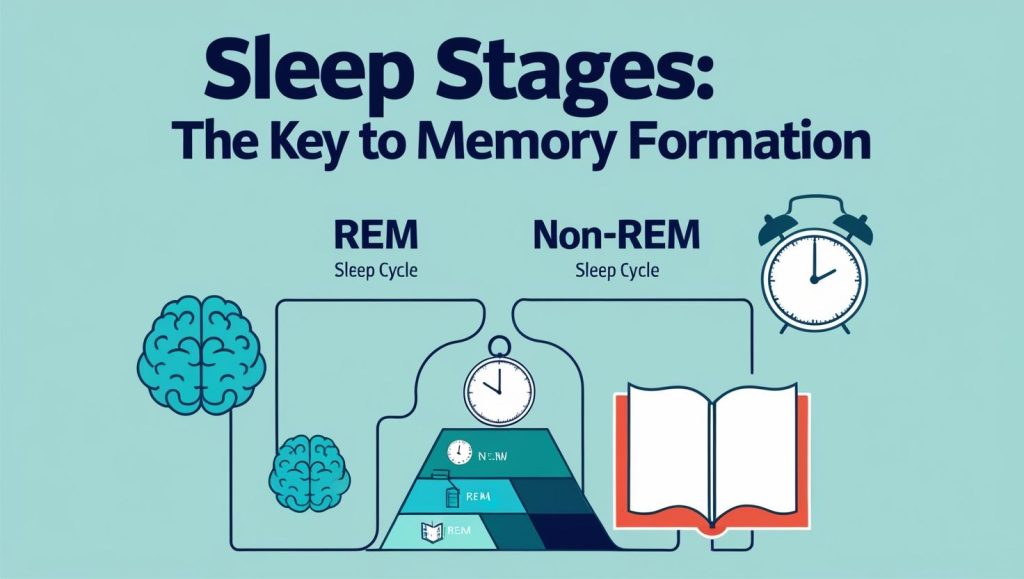
Sleep is not a single, uniform state. It cycles alternately through two different phases—Rapid Eye Movement (REM) sleep and Non-Rapid Eye Movement (NREM) sleep. They serve distinct purposes in learning and memory consolidation.
- NREM Sleep
When brain activity goes through a restorative period during deep NREM sleep, the hippocampus and cortex, memory-associated areas, work together to encode and store information. This period particularly consolidates declarative memory, which includes facts, information, and occurrences.
- REM Sleep
REM sleep, typically associated with dreaming, is integral to procedural memory, such as learning motor skills or problem-solving. REM sleep is also the phase in which creative thoughts are generated as the brain combines unrelated notions. Forgetting either phase equates to losing those important cognitive benefits directly influencing how efficiently we learn.
- The Role of Sleep in Retention
When you stay up until midnight cramming flashcards or watching lectures, you may feel like you’re getting an hour’s worth done each. But without getting a good night’s rest in return, you will lose much of what you have done. Sleep consolidates new information. Without sleep, your brain is a sieve, and most of the new information leaks out by morning.
Studies have shown time and time again that students who sleep enough after learning learn better than students who do not. A nap in the middle of a study session is also known to increase memory recall by a great degree.
- Sleep Deprivation and Cognitive Ability
Sleep deprivation, on the other hand, can dull focus, reaction speed, emotional stability, and judgment—skills necessary for success at school and work.
One of the most surprising surveys revealed that 24 hours of sleep deprivation had the same detrimental impact on thinking as drinking alcohol to the extent of being over the driving limit!

Memory Consolidation and the Science of Sleep
Consolidation of memory during sleep is intricate and fascinating. When we learn something new during the day, we temporarily store it in the hippocampus. While we sleep, particularly in the more profound stages of NREM sleep, we replay and consolidate the information to the cerebral cortex for storage.
Brain scanning studies even identify spikes of brainwave activity called “sleep spindles” during NREM sleep. The spindles are believed to help the brain retain key details of newly acquired material while discarding irrelevant rubbish.
In effect, a whole sleep cycle provides the brain with time to sift through the day’s mental output, accumulating what is most salient and jettisoning what is not.
Why Educators and Researchers Need to Emphasize Sleep
Teachers tend to remind students to prioritize studies but unconsciously ignore rest as an aspect of study performance. The fact is that incorporating education on sleep hygiene into lessons will help students achieve better performance.
Sleep researchers, in turn, may uncover new techniques for optimizing sleep for learning. For instance, studies of sleep reactivation of memory—a process that consolidates specific memories—are unlocking high-potential possibilities in education neuroscience.
Practical Strategies for Better Sleep
Here’s the best part: not only is better sleep absolutely possible, but even small modifications can lead to remarkable cognitive gains.
- Establish a Sleep Routine
Going to sleep and waking up at the same time every day (yes, even weekends!) will regulate your internal clock so that sleep and waking will be simpler.
- Prepare Your Sleeping Space
Ensure that your bedroom is quiet, dark, and cool. Employ blackout drapes or a white noise device to rid yourself of background distractions.
- Limit Stimulants at Night
Caffeine and blue light emitting devices disrupt sleep. Don’t drink coffee at least 6 hours before bedtime, and swap your bedtime phone scroll for a book.
- Employ Relaxation Techniques
Meditation, deep breathing, or a calming bedtime routine can quiet your mind and tell your brain it’s time to sleep.
- Use Naps Wisely
If you’re struggling to sleep enough at night, short naps can improve alertness. However, keep naps under 30 minutes and avoid late-afternoon rest to prevent disrupting your nighttime sleep.
How Students Can Use Sleep to Improve Academic Performance
For students juggling school, work, and extracurriculars, balancing it all might feel daunting. Still, sleep should remain non-negotiable—even if that means prioritizing quality over quantity.
- Active Rest and Study: Keep taking regular breaks between studies and sleep for maximum retention.
- Pre-test Preparation: Do not pull an all-nighter studying, rather sleep for at least 7 hours prior to an exam so that your brain can recall while under stress.
- Mindful Time Management: Make a habit of using calendars to avoid procrastination and midnight all-nighters, so academics do not at the expense of health.
Unlock the Cognitive Power of Sleep
The relationship between sleep, learning, and memory cannot be overstated. Scientific evidence overwhelmingly supports the idea that quality rest is essential for absorbing, understanding, and retaining information. Whether you’re guiding students, conducting research, or aiming to excel in your career, sleep isn’t just a pillar of health—it’s a tool for success.
By making sleep a priority, you’re not just resting. You’re investing in your cognitive performance and lifelong learning.