

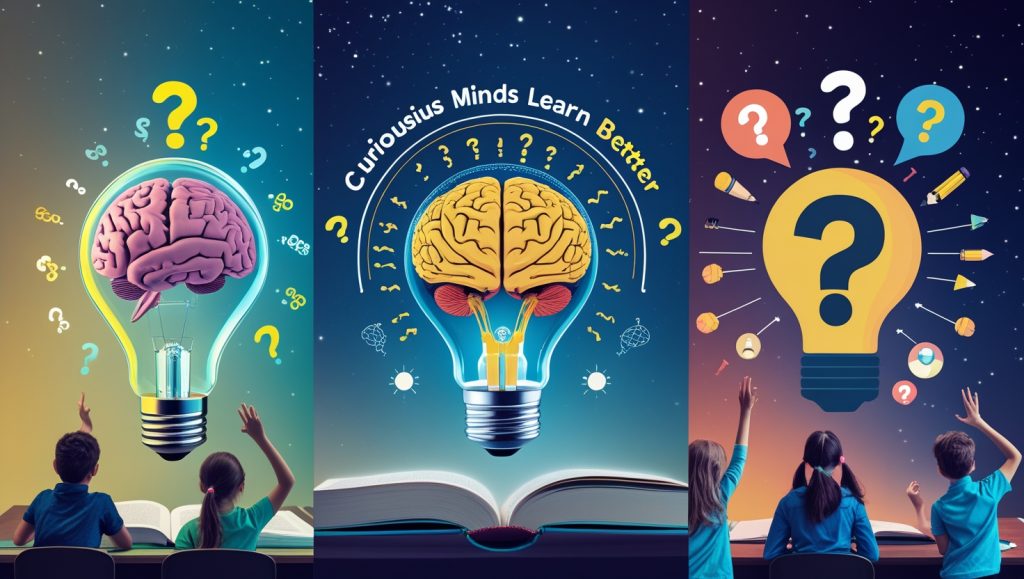
Curious Minds Learn Better: The Role of Curiosity in the Learning Process
Curiosity is usually the spark that ignites the flame of a lifetime of learning. But why is it such a valuable instrument in the learning process? How does it affect a learner’s ability to comprehend, recall, and apply information both in school and later in life?
This blog explores the key position curiosity plays in learning, combining an appreciation of human psychology with practical guidance for teachers, parents, students, and lifelong learners. By the end, you’ll be able to foster curiosity and how it can transform the way we learn and develop.
Why Curiosity is Essential for Learning
Curiosity drives individuals to discover, to ask, and explore about the world. Scientists refer to it as our brain’s inherent “reward system.” Fulfilling curiosity gets the brain to release dopamine, a chemical associated with motivation and pleasure.
From kids who shoot off “why” questions hour after hour, to grown-ups who study a new hobby for hours straight, curiosity transforms learning into an adventure.
Curiosity Increases Knowledge Retention
When one is indeed curious about a thing, one will be apt to memorize what one learns. For instance, cognitive neuroscience studies show that curiosity activates the brain regions involved in learning and memory consolidation strongly. Essentially, curiosity prepares the brain to absorb and store information for the long term.
Think back to when you fell down an internet rabbit hole chasing the latest information about some random topic—prehistoric dinosaurs to the latest technological trends. The chances are good, you remember the random tidbits of information you found online better than you remember facts that you memorized for a quiz.
Curiosity Encourages Critical Thinking
Curiosity not only makes people ask questions, but it also makes them question what they already know. Questioning is the first step towards developing critical thinking skills, which is a core part of any learning process. Curious learners are likely to deconstruct problems, think differently, and make informed decisions.
For example, in a classroom setting, a curious student fascinated with climate change will not only memorize facts but also ask the question, “Why do climates vary from one region to another?” or “How can global warming affect us and be prevented?”
Curiosity Builds Resilience
Where curiosity is the driving force behind learning, failure is less a loss than a possibility. Curious learners see failures as possibilities for learning, not as avoidances. This makes them more resilient and leads to a more growth-oriented mindset, where mistakes are welcomed as learning experiences rather than dreaded.
Overemphasis on Standardized Testing
When academic success is reduced to test scores, curiosity takes a backseat. Students become more concerned with memorizing answers rather than learning ideas—a passive activity that stifles intrinsic motivation.
Fear of Failure
Society associates failure with inadequacy. This might discourage students from asking questions, experimenting, or intellectual risks—exactly the actions involved in the curiosity-driven learning process.

Lack of Autonomy
Directing every detail of the learning process, from tasks to schedules, can limit discovery opportunities. Curiosity thrives when students can investigate topics of interest to them.
Instant Gratification Culture
The digital age, while empowering, has also diminished our focus span. Students prefer to search for instant answers, bypassing the thorough examination required for genuine curiosity.
How to Cultivate Curiosity in Learners
The better news? Curiosity is an ability that can be cultivated and strengthened. Here are tactics for different crowds—whether you’re a teacher, parent, or student:
Building a Curiosity-Driven Classroom
- Ask Open-Ended Questions
Avoid yes/no questions. Instead, give students the opportunity to explore and discuss. For example, instead of asking, “Is hydrogen a gas?” ask, “Why do you think hydrogen is the lightest element?” - Inquiry-Based Projects
Assign students a goal—like developing a model city powered by renewable energy—and allow them to come up with the solutions. - Model Curiosity as an Educator
Show real enthusiasm about topics so students are aware that curiosity doesn’t stop when you get older.
Supporting Curiosity at Home
- Create a Question-Friendly Environment
Never say a child’s question is “silly.” Explore answers together when you’re not sure of them. - Encourage Experimentation
From hands-on science kits to art supplies, provide materials that encourage exploration and creativity. - Model Lifelong Learning
Share your own learning experiences with your children—whether it’s trying a new recipe, working on a crossword, or taking an online class.

Tips for Lifelong Learners
- Pursue Passion Projects
Invest time in learning something you’re interested in. It could be photography, coding, or learning a foreign language. The thrill of learning will sustain you. - Ask “What’s Next?”
Once you’ve acquired knowledge, dig deeper. If you’re learning about World War II, for example, try to learn about its economic or cultural impact. - Take Risks
Tackle subjects or assignments that are outside of your comfort zone. The experience of working through new material often piques curiosity.
The Digital Role in Curiosity and Learning
Technology serves a double purpose in today’s pursuit of knowledge. On the one hand, it offers access to information unprecedented in history, making it more convenient than ever before to satisfy our curiosity. On the other, it has the potential to result in superficial learning when accessed passively. Here’s how to use digital tools to their best advantage:
- Interactive Tools and Platforms
Take advantage of apps or websites such as Duolingo for language learning or Coursera for classes to explore new passions at your own tempo. - Community-Driven Conversation
Join online forums, like Reddit discussions or live webinars, in which you may converse with experts and learn from each other. - Equilibrium Use
Employ screen time to nurture inquiry, but balance it with hands-on, experiential inquiry.
Why Curiosity is the Future of Education
The future workplace will value problem-solving, flexibility, and creativity over memorization. Cultivating curiosity gets people ready for this change, building skills to not only excel at work, but excel in life.
Curiosity-based educational models—through projects, personalization, and flexibility—empower students to take ownership of their process. It’s no longer memorizing answers but finding the possibilities created by questions.
Turning Curiosity into Action
Curiosity doesn’t just make us better learners—it makes us better humans. When individuals and educators come together to foster this innate drive, the potential for growth is exponential.
What sparks your curiosity? Whether you’re an educator redefining classroom learning or a lifelong learner on a personal quest, remember this truth—a question asked today could ignite the discoveries of tomorrow.
Suggested Next Step
Need even more inspiration to inspire curiosity? Subscribe to our newsletter for expert advice, teaching strategies, and resources to empower curious minds everywhere.
