

Adapting to Different Learning Styles: Visual, Auditory, and Kinesthetic
Learning is a very individualized process. What is perfect for one might not work for another. Ever wondered why some individuals live on diagrams, while others require hands-on experience? The reason has to do with learning styles.
This blog explains how you can adapt your study or teaching style to three primary learning styles—visual, auditory, and kinesthetic. After reading it, you’ll be able to tailor learning experiences to your own requirements or the requirements of others. Whether you’re an online learner, parent, teacher, or educator, these suggestions can transform the way you learn.
What Are Learning Styles?
Learning styles are the different ways in which individuals absorb and retain information. While everyone uses a mix of styles, most people have a favorite way of doing things. Neil Fleming’s VAK theory defines three major learning styles:
- Visual learners learn best through images, diagrams, charts, and text.
- Auditory learners learn best through hearing verbal information like lectures, discussions, or audio material.
- Kinesthetic learners prefer to get their hands dirty and learn by experience.
Understanding these styles can yield better learning plans, whether you are teaching a class, parenting, or embarking on self-educating.
Adapting to Visual Learners
Visual learners learn most when they see. If you are a visual learner, or want to help someone with this type of learning, the answer is to show information in a visually appealing manner.
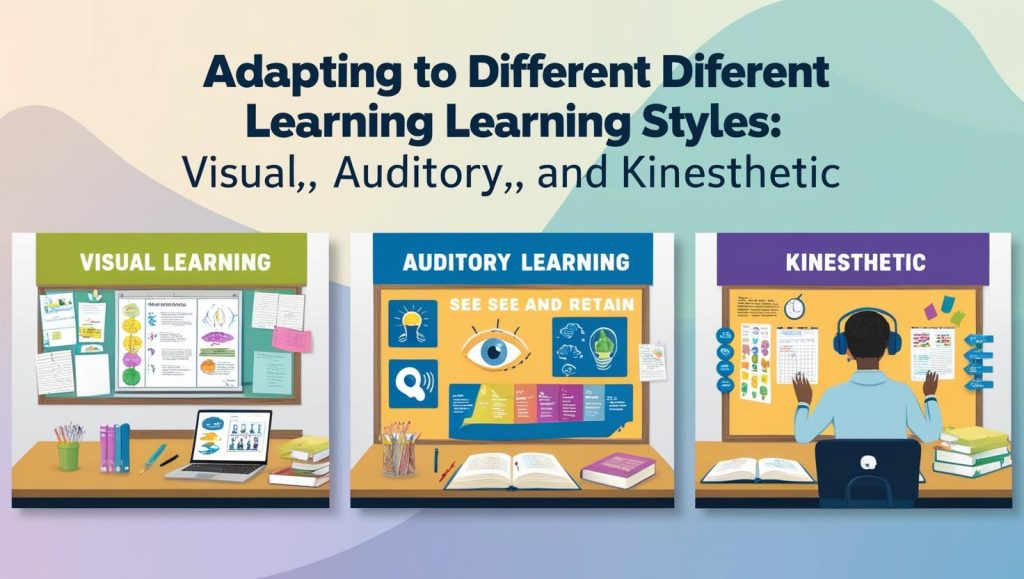
Characteristics of Visual Learners
Visual learners are likely to:
- tend to enjoy diagrams, charts, and graphs.
- take careful notes and prefer written instructions.
- remember faces better than names.
- be drawn to color-coded or organized material.
Read More On Houghton University About Visual Learning Style
Tips for Visual Learning
Here’s how to optimize learning for visual learners:
- employ infographics, mind maps, or flowcharts that distill complex information into bite-sized visuals.
- highlight or color-code important sections of notes or study guides so key points can be highlighted.
- Watch videos or presentations with clear diagrams and written images rather than just text.
- Use digital tools like Canva or Lucid chart to create customized visuals to organize thoughts.
For instance, when studying history, try to create a timeline of pictures of important historical people and events. For teachers, include a whiteboard or slides with lots of pictures as it might be more engaging for visual learners.
Acclimating to Auditory Learners
If you’ve noticed someone constantly repeating things aloud to help themselves understand, chances are they’re an auditory learner. For them, sound is the most effective way to process information.
Characteristics of Auditory Learners
Auditory learners typically:
- Thrive in discussions or group work.
- Remember spoken instructions better than written ones.
- Enjoy podcasts, lectures, and audiobooks.
- Have strong verbal communication skills.
Tips for Auditory Learning
Here’s how auditory learners can improve their education strategies:
- Audio record class discussions or lectures to refer to in the future.
- Listen to audio books or learning podcasts to enhance learning.
- Study with a study group where topics are discussed orally.
- Repeat information back to another individual—it is a great method to solidify learning.
For example, while acquiring new vocabulary, try to listen to the pronunciation of the word repeatedly using applications like Quizlet’s audio component. Educators and content creators can add voiceovers or arguments in videos because auditory learners will not comprehend solely textual content.
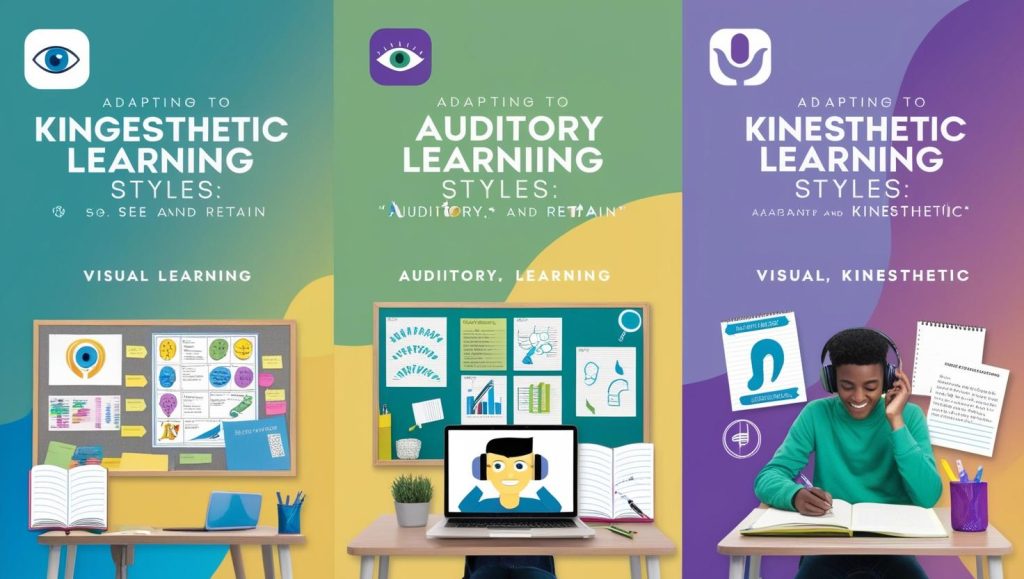
Meeting Kinesthetic Learners’ Needs
Kinesthetic learners learn optimally when they are able to do something rather than just see or hear. They need to experience hands-on activities, movement, and actual experiences to process information effectively.
Characteristics of Kinesthetic Learners
Kinesthetic learners do:
- Learn from doing and doing, rather than sitting in a lecture.
- Find it hard to stay focused for passive learning exercises.
- Use hand gestures and posture when speaking or explaining.
- Learns better through experiences such as labs, workshops, or simulations.
Read More On Houghton University About Kinesthetic Learning Style
Techniques for Kinesthetic Learning
To create better learning techniques for kinesthetic learners:
- Engage in hands-on projects, experiments, and applied problem-solving experiences.
- Use flashcards or interactive games as touch-based learning tools.
- Take frequent breaks between study sessions to stretch and re-direct attention.
- Turn abstract concepts into physical demonstrations. For example, to learn a math concept like geometry, sketch diagrams or utilize objects to literally construct shapes.
Parents or instructors can develop activities in which students work physically with materials—for example, using 3D models to learn about anatomy or performing science experiments to learn essential ideas.
Mixing and Mixing Learning Styles
It should be noted that individuals are rarely restricted to a single learning style. Most can benefit from a mixture of visual, auditory, and kinesthetic strategies. Some suggestions for mixing them are:
- Apply Multimedia Learning Tools
Distance learners can make use of websites containing text, images, and sound—try Khan Academy or websites like Udemy.
- Engage All the Senses
Professionals can implement activities like presentations that involve visuals, oral description, and hands-on demos.

- Customize the Approach
As an example, when acquiring a language:
Utilize images for vocabulary flashcards.
Include listening practice like audio bites or videos.
Practice role-playing conversations for a kinesthetic touch.
Why It Matters
Learning and adapting to different learning styles is key to academic success and personal growth. For students, a tailored strategy can improve focus, memory, and confidence. For instructors, supporting diverse needs can increase lesson effectiveness, encourage diversity, and make them more engaging.
As a student or adult learner, having an awareness of your dominant learning style helps you tackle any subject more effectively. It’s having a road map to success for yourself.
Start Learning Smarter Today
Learning about your learning styles is just the first step. No matter what your learning style—visual, auditory, kinesthetic, or a mix of the three—refining your approach can lead to deeper, more effective learning.
If you’re willing to do well in your self-study or learning, start by experimenting with techniques from this blog. And if you’re a parent or teacher, attempt to identify your learners’ strengths and design lessons accordingly. You’ll be amazed at the result!
Now—how do you like to learn? Let us know in the comments and help others in their learning processes.


Fantastic read! 👏 I really appreciate how clearly you explained the topic—your writing not only shows expertise but also makes the subject approachable for a wide audience. It’s rare to come across content that feels both insightful and practical at the same time. At explodingbrands.de we run a growing directory site in Germany that features businesses from many different categories. That’s why I truly value articles like yours, because they highlight how knowledge and visibility can create stronger connections between people, services, and opportunities.Keep up the great work—I’ll definitely be checking back for more of your insights! 🚀
I must say this article is extremely well written, insightful, and packed with valuable knowledge that shows the author’s deep expertise on the subject, and I truly appreciate the time and effort that has gone into creating such high-quality content because it is not only helpful but also inspiring for readers like me who are always looking for trustworthy resources online. Keep up the good work and write more. i am a follower.