Active vs. Passive Learning: What Works Best?
In the world of education, the debate between active and passive learning is heating up again. Teachers and students are looking for the best way to learn. This section will explain the main differences between these two methods. We’ll look at what makes each one effective and what challenges they face.
A vibrant classroom scene depicting two distinct areas: one side showing students actively engaging in hands-on experiments, collaborating in groups, and using interactive technology; the other side illustrating students passively sitting at desks, listening to a lecturer and staring at a blackboard. The contrast between the dynamic energy of active learners and the stillness of passive learners, with colorful educational materials scattered throughout the active side and a more subdued palette on the passive side.
Key Takeaways
- Explore the core distinctions between active and passive learning approaches
- Understand the underlying psychological and neurological principles that drive the effectiveness of active learning
- Examine the benefits and challenges associated with implementing active learning strategies
- Discover real-world examples and case studies showcasing the impact of active learning in various educational and corporate settings
- Gain insights into transforming passive learning environments into engaging, active learning experience
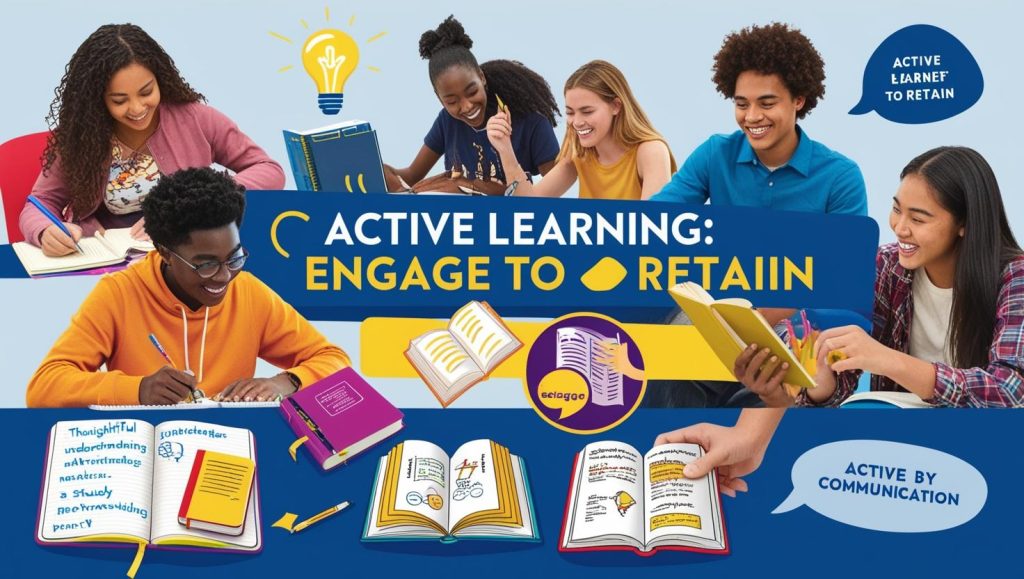
Understanding the Fundamentals of Learning Methods
Exploring learning methods, we find different ways to understand and remember knowledge. From active learning strategies to passive learning techniques, the psychology behind them is key. It helps us learn better and remember more.
Defining Learning Approaches
Active learning gets learners involved through activities, discussions, and solving problems. It makes us think deeply and understand better. On the other hand, passive learning lets us soak up info through lectures, readings, or videos. Here, we just listen and watch.
Key Characteristics of Learning Styles
- Visual learners do well with diagrams, charts, and videos.
- Auditory learners learn best from lectures, discussions, or audio.
- Kinesthetic learners like to learn by doing, touching, and feeling.
- Reading/writing learners do best with written texts, like notes or essays.
The Psychology Behind Learning Methods
The psychology of learning looks at how we get, keep, and use knowledge. Active learning grabs our attention, helps us process info deeply, and strengthens our brain connections. This leads to better learning retention techniques. Passive learning has its place but might not engage us as much.
A vibrant classroom scene depicting students engaged in hands-on activities, collaborating around tables filled with colorful materials, a large whiteboard with diagrams and notes in the background, diverse learners interacting enthusiastically, some using technology like tablets and laptops, dynamic energy and focus radiating throughout the space.
“The mind is not a vessel to be filled, but a fire to be kindled.” – Plutarch
Active vs. Passive Learning: Core Differences
The debate between active and passive learning is key in education. Passive learning means information flows one way, from teacher to student. Active learning, on the other hand, gets students involved, making them analyze and apply what they learn.
Student involvement is at the core of this difference. In passive learning, students mainly listen, take notes, and memorize. Active learning, with group discussions, hands-on activities, and problem-solving exercises, makes students build their own understanding.
“Active learning is not just about being physically engaged, but also about mental engagement and the application of knowledge.”
Active learning boosts student engagement, critical thinking, and retention. It helps students grasp material deeply and use it in real life.
A split scene illustrating active and passive learning methods; on the left, a vibrant classroom with engaged students participating in discussions, collaborating on projects, and using interactive tools; on the right, a serene library setting where a student is quietly reading a book, surrounded by stacks of books and soft lighting.
Yet, starting active learning can be tough. It needs more planning, resources, and teacher help. The right mix of active and passive learning depends on the goals, students, and the classroom setting.

The Science Behind Active Learning Strategies
Active learning strategies are backed by science. Studies show they offer benefits that traditional methods can’t match. They help improve learning outcomes significantly.
Neurological Benefits of Active Engagement
Active learning deeply engages the brain. It stimulates neural pathways and boosts cognitive function. Research proves that active engagement increases blood flow and neural activity in the brain.
This leads to better information processing and memory retention.
Memory Formation and Retention
The active learning benefits also apply to memory. By participating in learning, people form stronger neural connections. This makes information stick in their long-term memory.
As a result, they have improved recall and better knowledge retention over time.
Cognitive Processing in Active Learning
Active learning boosts higher-order cognitive skills. It encourages critical thinking, problem-solving, and creative ideation. Learners who are actively engaged tend to analyze, synthesize, and apply knowledge better.
This leads to a deeper understanding of the subject matter.
“Active learning is not just about engaging students physically; it’s about engaging them mentally, emotionally, and intellectually. The science shows that this approach leads to more effective and enduring learning.”
Neuroscience and cognitive psychology support the benefits of active learning. They show it can transform the learning experience and improve learning outcomes in many settings.
Traditional Passive Learning Methods and Their Impact
For centuries, traditional learning methods like lectures and memorization have been key in schools around the world. These methods have been the norm for teaching. But, as the world changes, the flaws in these methods are clear.
One big issue with passive learning is keeping information in mind. Research shows that students who just listen and don’t engage often forget more than those who actively participate. This is because they don’t get to apply what they learn.
Passive learning also makes it hard to think critically and solve problems. Students who don’t take part in learning can’t connect what they learn to real life. This makes it tough for them to learn on their own and succeed in the long run.
“Passive learning is like a one-way street – the information flows from the instructor to the student, with little opportunity for feedback or interaction. This can lead to a lack of deeper understanding and application of the material.”
Today, the need for new, more engaging ways to teach is clear. Teachers and schools are looking into more active learning methods. They want to help students take charge of their learning.
Benefits and Limitations of Active Learning Approaches
The debate between active and passive learning is growing. Active learning has many benefits but also challenges. Understanding both can show how they affect learning effectiveness.
Advantages in Knowledge Retention
Active learning boosts student engagement and active learning benefits. Students who participate more likely remember what they learn. This method helps them think critically and solve problems better.
Challenges in Implementation
Switching to active learning can be tough. It needs big changes in teaching and classroom setup. Teachers must work hard to make active learning work well in class.
Success Metrics and Outcomes
It’s hard to know if active learning works. Teachers need to look at how well students do and if they’re happy. Creating good ways to check progress and improving active learning is key.
“Active learning is not just a teaching method – it’s a mindset that empowers students to take ownership of their learning journey.”

Transforming Passive Learning into Active Engagement
Changing passive learning to active engagement is key to better education. By using engaging learning techniques, teachers can make learning more interactive. This way, students become more involved in their education.
Interactive learning strategies are a great way to encourage critical thinking and problem-solving. Here are some ideas:
- Incorporating group discussions and collaborative projects
- Encouraging students to ask questions and share their insights
- Integrating hands-on activities and experiential learning opportunities
- Utilizing multimedia and technology to enhance the learning experience
Switching from lectures to interactive learning helps students remember more. They understand the material better and feel more in control of their learning.
“The best way to learn is to do. The only way to learn is to do.” – Richard Feynman
Changing teaching methods to engage students more requires trying new things. Teachers need to be open to feedback and keep improving their methods.
By using active learning, teachers can make learning exciting. This approach helps students love learning and take an active role in their education.
Real-World Applications and Case Studies
Active learning is more than just a classroom tool. It’s changing how we learn in schools and at work. By using active learning, we see big improvements in how well we learn.
Educational Institution Success Stories
At the University of California, Berkeley, active learning in STEM classes has made a big difference. Students in these classes scored 6% higher on exams than those in traditional lectures. This shows active learning helps us understand and remember what we learn better.
Corporate Training Examples
- Software giant Salesforce uses active learning in their training. Hands-on activities and teamwork have boosted knowledge transfer by 20% and employee interest by 15%.
- GE, a big company, uses active learning for leadership training. They’ve seen a 30% better use of new skills and a 25% shorter training time than before.
Research-Backed Results
Many studies show active learning’s benefits. A study in the Proceedings of the National Academy of Sciences found active learning raises exam scores by 6% and cuts failure rates by 55%. These results highlight the positive effects of being actively involved in learning.
“The shift towards active learning is not just a trend, but a fundamental shift in how we approach education and training. The results speak for themselves – active engagement leads to better learning, higher retention, and tangible improvements in performance.”
Implementing Effective Learning Strategies in Modern Education
In today’s fast-changing education world, active learning is key. It boosts student interest and helps them remember more. By using new methods, teachers can help students reach their best and create a lively learning space.
One important rule is to prioritize active learning approaches. This means adding fun, hands-on tasks and group work. It helps students get more involved and learn better.
Using tech like virtual labs and online tools can also help. These tools make learning fun and fit different learning styles. They’re perfect for today’s students.
“The most effective way to learn is to do. Learning involves the active construction of meaning from information and experience.”
Creating a learning space that focuses on students is also vital. This way, each student gets the help they need. It makes them feel more in charge of their learning, leading to better grades.
But, starting these changes can be tough. Teachers might face pushback, practical issues, or not enough resources. Yet, with a positive attitude and teamwork, these problems can be solved. This opens the door to a more exciting learning experience.
Conclusion
The difference between active and passive learning is key for better education and personal growth. We’ve seen how active learning beats passive learning in keeping knowledge, improving thinking, and lasting impact. This shows that being actively involved in learning is more effective.
Using active learning, students and professionals can get the most out of their education. They do hands-on activities, work together to solve problems, and think critically. This approach not only makes learning better but also helps develop important skills like solving problems, communicating, and being adaptable.
It’s crucial to use active learning in today’s education and professional growth. By making learning more active, we help people succeed, innovate, and grow. This leads to a more engaged and successful world for everyone.
FAQ
What are the key differences between active and passive learning?
Active learning means students are fully involved in their learning. They process information and apply what they learn. Passive learning, however, focuses more on the teacher. Students mainly listen and absorb without much action.
What are the benefits of active learning strategies?
Active learning boosts knowledge retention and critical thinking. It also makes students more engaged and motivated. This approach helps students understand and apply what they learn in real ways.
What are the limitations of passive learning techniques?
Passive learning, like traditional lectures, can result in lower retention and less engagement. It often leads to a shallow understanding of the material. Students might find it hard to apply what they’ve learned in real-life situations.
How can educators effectively implement active learning strategies in the classroom?
Teachers can use group discussions, problem-solving, and hands-on activities. These methods encourage students to participate and engage deeply with the material. It helps them take charge of their learning.
What are some real-world examples of successful active learning implementation?
Many schools and companies have seen great results from active learning. Universities have turned lecture halls into active learning spaces. Companies use interactive training to improve their teams.
How can students take an active role in their own learning?
Students can improve their learning by joining class discussions and asking questions. They should also participate in hands-on activities. Taking the initiative to apply what they learn and collaborating with peers is also key.